Responsible use
Read the release metadata with the data
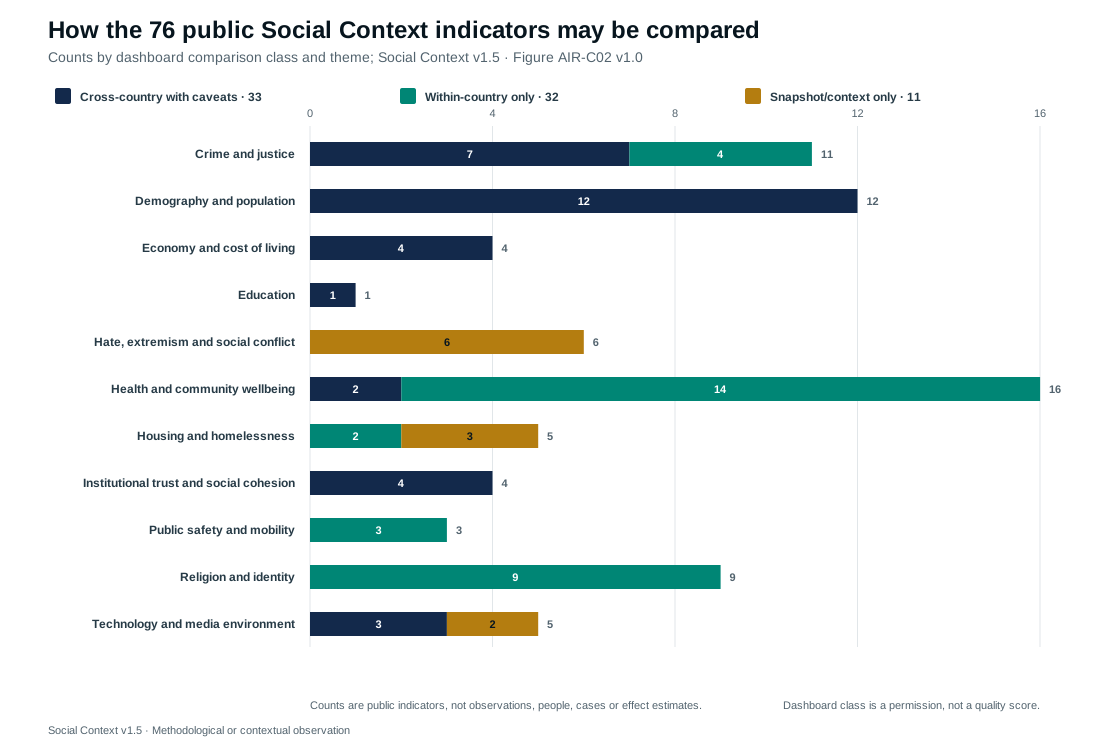
Blank values are missing or unavailable, not zero. The case CSV contains only the 22 fields approved for public release and only records marked “yes” in the authoritative workbook’s inclusion field. The social-context registry includes permissions that determine whether an indicator supports public display, within-country trends, cross-country comparison or exploratory association.
The v4.2.3 case data reproduce the project lead’s reviewed workbook without recoding. The release remains exploratory: inclusion, AIR level and other classifications are expert analytical judgements based on the project methodology and should not be treated as population incidence or independent causal validation.
Direct source URLs are retained where the governed source register provides one. A small number of compiled context observations identify a source but have no single public URL; no link is invented. Upstream source terms remain applicable. Cite the AIR release and the original source where your use depends on that source.
Five Eyes AIR Case Database
Reviewed v4.2.3 public release
The authoritative workbook contains 347 records. The public case release contains the 346 records marked “yes” in its inclusion field; the single record marked “no” remains in the master workbook for audit lineage and is not published.
The public CSV presents the approved 22 fields in the project lead’s specified order. Internal review fields, source metadata and administrative fields are not included.
Five Eyes Social Context Database
Observed values and comparison permissions
The full versioned context CSV contains 4,141 observations. The public explorer exposes 4,017 observations across 76 populated indicator series; 124 legacy methodology-only observations remain in the full release for audit but are excluded from public analytical selectors. The indicator registry is essential for interpreting units, coverage and comparison permissions.
Inspect indicator coverage and caveats in the Social Context Explorer →
AIR Programme Insights
Immutable figure versions and supporting data
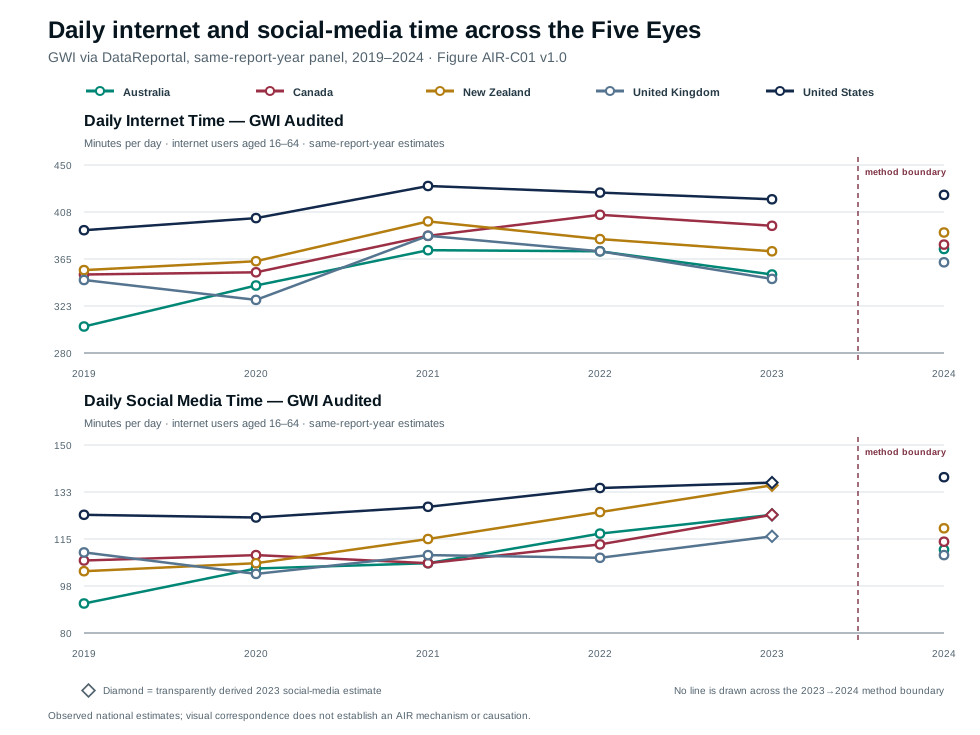
Each released fixed figure has a write-once version bundle containing a publication SVG, rectangular supporting CSV, citation, explanatory panel, complete figure payload and content manifest. A material change requires a new version and retains the earlier URL. These files remain available without JavaScript.
Public documentation
Methods and operational definitions
Methodology and limitations
Units, inclusion rules, missingness, source hierarchy, transformations, disclosure controls, validation status and known limitations.
AIR Framework
The proposed AIR cycle, non-directional conduct boundaries, incident categories, evidence-level rubric and limits of inference.
Publication-gate status
The AIR Explorer remains visibly closed to row-level case browsing until governed publication approval is complete.
Indicator governance
Review public series, source regimes, missing country-years and the operations permitted for each indicator.
Border Security & Public Safety
The current release provides selected migration and public-safety context but no dedicated border-system performance dataset. The evidence gap is documented rather than filled with a proxy.
Reports and archives
No report is represented as published before it exists
The permanent annual series will be titled The State of AIR in the Five Eyes. No annual report PDF has yet been released through this website. When released, each report will retain its year, version, publication date and downloadable PDF, and superseded materials will remain archived.
Quarterly AIR Updates will be reviewed in January, April, July and October. The archive will begin with the first issued update; empty placeholder documents are not provided as though they were research outputs.
Preferred website citation
Cite the programme and the specific release
Sundberg, K.W. & Reynaud, A. (2026). Algorithmic Immersion Radicalisation (AIR): Five Eyes Research Dashboard. fiveeyesair.org.
For reproducibility, add the dataset or figure title, release version, download or access date, and active filters or transformation. A figure-specific citation is supplied with each fixed AIR Programme Insight export.